
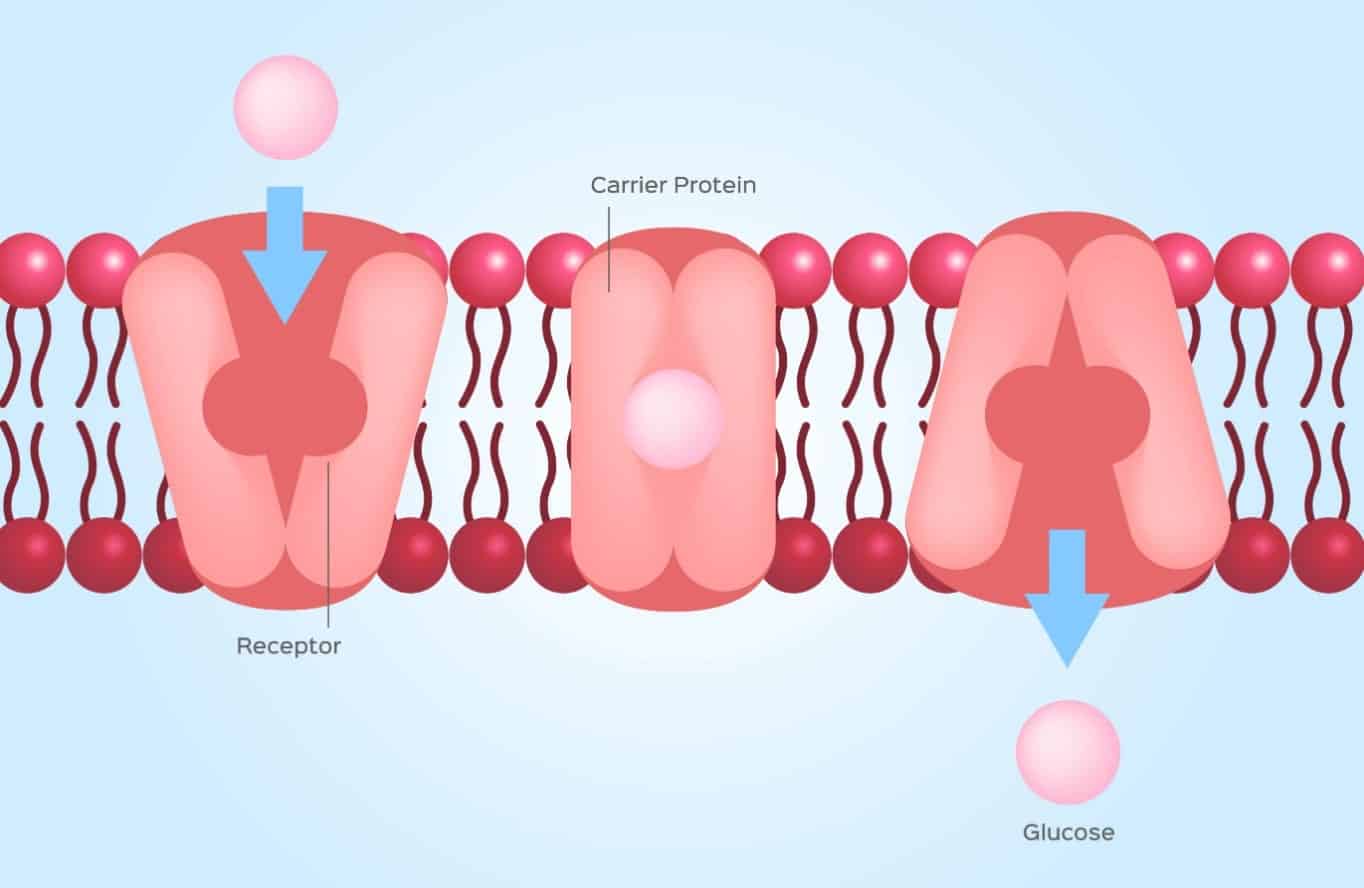
Passive transport is the movement of molecules from an area of higher concentration to an area of lower concentration without the use of energy. There are at least four main types of passive transport which are important to cells because they move materials of small molecular weight across membranes.
Read on to know more about this process and how it permeates our daily lives.
Types
Diffusion

Diffusion is described as the movement of substances from an area of high concentration to one that has a lower concentration. The concentration gradient is the difference of concentration between these two areas, and diffusion is demonstrated when substances move down the concentration gradient.
On the other hand, active transport moves substances from a low concentration area to an area with a higher concentration, which is the exact opposite of passive transport.
In other words, passive transport occurs when substances move down the concentration gradient, while active transport involves moving substances against the concentration gradient. Examples of diffusion include:
Note: This post may contain affiliate links which will take you to online retailers that sell products and services. If you click on one and buy something, I may earn from qualifying purchases. See my Affiliate Disclosure for more details.
- gas exchange for photosynthesis, where carbon dioxide flows from the air to the leaf and oxygen flows from the leaf to the air
- gas exchange for respiration, where oxygen flows from the blood to the cells of the tissues and carbon dioxide flows in the opposite direction
- gas exchange at the alveoli, whereby oxygen flows from the air to the blood and carbon dioxide flows from the blood to the air
- osmosis, which is the diffusion of water through a cell membrane which is semipermeable
- the transfer of a transmitter substance – for example, acetylcholine from a presynaptic to postsynaptic membrane at the synapse.
Facilitated Diffusion

Also called facilitated transport or passive-mediated transport, facilitated diffusion occurs when molecules or ions are processed through spontaneous passive transport. The ions and molecules are moved across a biological membrane through certain transmembrane integral proteins.
Because the transport is passive, it does not require direct chemical energy from ATP hydrolysis during the transport itself. Instead, these ions and molecules move down their concentration gradient while reflecting their diffusive nature.
In facilitated diffusion, passive transport allows certain substances to cross membranes with the help of special proteins that are there to help transport these substances.
Substances such as sodium ions, glucose, and chloride ions cannot pass through the phospholipid bilayer of the cell membrane, but they can be transported through special proteins, including carrier proteins, which are embedded in the cell membrane.
Carrier proteins will bind to some molecules, then they will change shape and deposit the molecules across the membrane. Once this process is done, the proteins will return to their original position.
There are several ways in which facilitated diffusion is different from regular diffusion. First, in order for the transport to occur, the molecular binding between the membrane-embedded channel or carrier protein and the cargo is necessary for the activity to occur.
Second, the facilitated diffusion rate is saturable with regards to the two phases’ concentration difference, as compared to free diffusion, which is linear in the concentration difference.
Third, this type of diffusion’s temperature dependence is very different because of the presence of an activated binding event, while in free diffusion, the dependence on temperature is very mild.
Filtration

Filtration is defined as the movement of solute molecules and water across the membrane of a cell, and the movement occurs through normal cardiovascular pressure. In organs such as the kidney and the liver, certain functions are based on the filtration process.
In facilitated diffusion, the molecules move across the membrane cell through carrier proteins, which are found deep inside the cell membrane. In the process, the solutes move down the concentration gradient and therefore, they do not require the use of energy in order to move.
Osmosis

Osmosis is an actual type of diffusion and involves water molecules moving through the membrane of a cell from a hypotonic solution to a hypertonic solution. The differences between these two types of solution are simple to understand.
A hypotonic solution has a low concentration of solutes, but a hypertonic solution has a very high concentration of solutes. In solutions of all types, the solutes are considered minor components that dissolve in the solvent.
Major examples of osmosis include the reabsorption of water by the proximal and distal convoluted tubules of the nephron; reabsorption of water by the roots of a plant; absorption of water by the alimentary canal, e.g., the small intestine, stomach, and the colon; and the reabsorption of fluids from tissues into the venule ends of the capillaries of the blood.
Why Are These Processes Important?

Diffusion
Diffusion allows the cells in the body to get the nutrients and oxygen they need to survive. It also plays an important role in cell signaling, which mediates the life processes of organisms. On a practical level, diffusion is important because it does the following:
- Allows nutrients to pass through the cells, because nutrients such as glucose are necessary to survive. When diffusion occurs, glucose and other nutrients can pass through the cells whenever they need to do so.
- Makes medicines easier to take, because it encourages the medications inside of a capsule to move from that capsule into the digestive system, where it uses diffusion to move into the bloodstream. Without diffusion, patients would always need IVs to allow the medicine to enter their body, but with diffusion, even transdermal patches and other products can be used instead.
- Helps the nervous system work properly because without products such as the sodium-potassium pump, which works through diffusion, the nerve cells would never innovate.
- Promotes cellular respiration. Cells need oxygen to survive, and oxygen allows the cells to respire because it moves from high-concentration areas to areas of low concentration.
Facilitated Diffusion
One of the main characteristics of facilitated diffusion is that it prevents the buildup of unwanted molecules within the cell; it also prevents the cell from taking molecules from the external medium that might be there in high concentrations.
There are essentially three very important characteristics of facilitated diffusion, which are as follows:
- It is a positive activity because the direction of net movement is determined by the relative concentrations of the substances transported both in and out of the cell.
- If all of the protein carriers are being used, it may become saturated.
- It is very specific, meaning only certain ions or molecules are transported by a given carrier.
In biology, some substances are hydrophilic, and proteins from membranes provide a way for these molecules to cross the membrane. In addition, they are facilitated by special proteins in order for the substances to move across the membranes without expending ATP energy, as long as there is a concentration gradient already in existence.
This is an example of a facilitated diffusion. ATP energy is a necessity if the movement is against the concentration gradient. So, just how does facilitated diffusion help? Read on.
With facilitated diffusion, the proteins form literal channels in the membranes so that molecules can pass through them. Some of these channels are open, but other channels can be controlled. Furthermore, some of these channels let various molecules cross, and these are quite large.
When proteins form pores that are very large, and these pores allow the molecules that are as small as proteins to pass, the pores are called porins. However, occasionally the molecule attaches to the transport proteins and the protein rotates, releasing the molecule that is inside of the cell.
These are known as aquaporins. Aquaporins, therefore, help transport water across the membrane of the cell.
You might also like our article “10 Different Types of Protists”
Filtration
Filtration simply refers to the movement of solutes and water across the membrane of a cell, and the movement is a result of hydrostatic pressure found in the cardiovascular system.
It is also described as the process whereby suspended particles from the fluid are separated from the fluid via a porous material which allows the fluid to pass through, even while the suspended particles are retained.
A great example of filtration in the human body is renal, or kidney filtration. In this process, the blood in the body is filtered in an area of the kidney known as the glomerulus.
This is done so that certain substances such as proteins and cells, which are essential to the body’s proper functioning, are retained and then selectively reabsorbed back into the body.
In other words, this describes the process of kidney dialysis, which many people rely on to stay alive, and it is all possible because of filtration.

Osmosis
Osmosis does two things that are extremely important to the body. It helps with the distribution of essential nutrients in the body, and it excretes metabolic waste products. Cells always have semipermeable membranes, and therefore, osmosis is the reason why liquid solvents pass through these membranes.
Cell membranes are outer coverings of the cells found in animals and plants, and they serve as a barrier that allows for the separation of the cells from their environment. The semipermeable nature of the membrane means it controls the substances that enter and exit the cell, and it also means that not every substance will enter the cell with the same amount of ease.
If osmosis didn’t exist, two things would happen; first, even toxic substances would be able to invade the cell, and second, all essential substances would spread into the surrounding areas of the cell instead of going through it.
Through osmosis, the liquid solvents needed by the body can pass through the semipermeable membranes that don’t allow solutes to enter.
Cells can be exposed either to an isotonic solution, which means it neither shrinks nor swells; or to a hypertonic solution, which means the cells decrease in size because they lose water. Finally, the cell can be exposed to a hypotonic solution, which means it grows bigger.
FAQs about Passive Transport
Q: How do oxygen molecules move across the cell membrane?
A: Through diffusion.
Q: How do ions and polar molecules diffuse all the cell membrane?
A: Through facilitated diffusion.
Q: What is the main difference between active and passive transport?
A: During active transport, energy is used, while no energy is required during passive transport.
Q: How is glucose transported inside a cell?
A: Through facilitated diffusion.
Q: What is the main difference between facilitated diffusion and regular diffusion?
A: Both are passive; however, with facilitated diffusion, molecules do not pass between the phospholipids but rather through a protein channel, because ions and polar molecules are unable to diffuse across the phospholipid bilayer.
Glossary Terms about Passive Transport
Autotroph: An organism that can capture energy from chemicals or sunlight and then use it to produce its own food.
Chlorophyll: A green photosynthetic pigment that is located in plants’ chloroplasts; chlorophyll absorbs the energy of the sun to produce photosynthesis.
Diffusion: The Natural spreading of particles through a liquid or gas, always from an area of high concentration to a low-concentration area.
Endocytosis: When large substances move into the cell; hint: think endo = enter.
Exocytosis: When large substances move out of a cell; hint: think exo = exit.
Glucose: A simple sugar that is crucial in living organisms because it is an important energy source.
Heterotroph: An organism that is unable to make its own food and therefore, it gets food by consuming other living things.
Osmosis: When water molecules diffuse across a selectively permeable membrane.
Passive Transport: When substances move through the cell membrane without the use of energy in the cell; these substances include energy from the sun, oxygen, and water.
Photosynthesis: A process that involves plants and other autotrophs capturing and using light energy in order to make food from water and carbon dioxide. The roots provide water, the sun provides energy, and the air provides carbon dioxide, and later on, the plant will breathe out oxygen.
Transport Protein: A complex molecule that is embedded in the cell membrane; it helps move various substances in and out of cells.
Ultrafiltration: High-pressure filtration through a membrane that is semipermeable and whereby colloidal particles are retained while smaller solutes are forced to move across a cell membrane by forces involving hydrostatic pressure. It also refers to the process whereby particles of one size are separated from particles of another size vi